
leave a message
If you are interested in our products and want to know more details,please leave a message here,we will reply you as soon as we can.


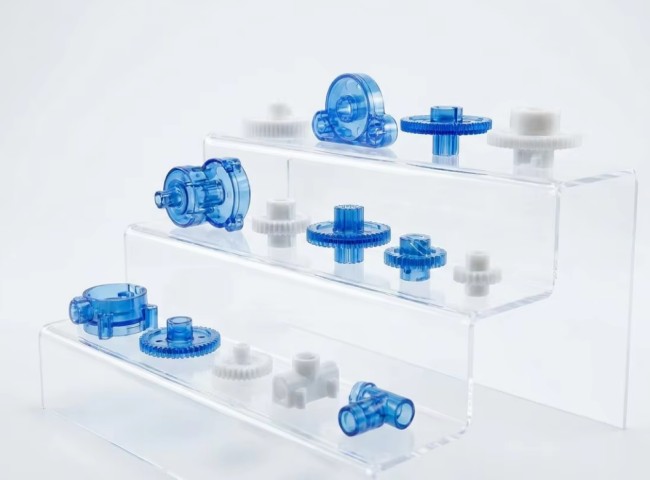
When you're bringing a plastic product from concept to reality, one of the first decisions you'll face is choosing between injection molding and 3D printing. The wrong choice can cost you months of development time and tens of thousands of dollars. Yet the right choice is rarely obvious — it depends on your volume, material requirements, budget, and timeline. Let's break it down so you can make the call with confidence.
Injection molding forces molten plastic into a precision-machined steel mold under high pressure. The result: parts with exceptional surface finish, tight tolerances, and consistent quality — at scale. 3D printing builds parts layer by layer from a digital file, with no tooling required. The result: extreme design freedom and rapid iteration — at the cost of surface quality and material performance.
Think of it this way: injection molding is like printing a newspaper. The setup is expensive, but once you're running, each copy costs pennies. 3D printing is like handwriting a letter. You can start immediately, and every piece can be different — but each one takes time and costs roughly the same.
Neither method is universally superior. The question is: which trade-offs work for your specific situation?
This is the classic break-even threshold. For runs under 1,000 units, the mold cost typically outweighs the per-part savings of injection molding. Above 1,000 units, the economics flip decisively in injection molding's favor.
At Yistar Plastic, we've seen projects where the mold investment pays for itself within the first production run of 5,000 parts — and every subsequent run is essentially pure margin improvement for the buyer.
Real numbers: A mold for a simple palm-sized enclosure might cost  8,000. At 5,000 units, that's
  1.60 per part in tooling amortization, plus
  0.50 in material and cycle cost. Compare that to
  15 per part for 3D printing at the same volume. The math speaks for itself.
Injection molded parts come out of the mold with glossy, smooth surfaces. You can specify SPI (Society of the Plastics Industry) finish grades from A-1 (diamond-buffed mirror) to D-3 (blasted matte). Texture, grain patterns, and even logos can be etched directly into the mold.
3D printed parts — even post-processed ones — show layer lines. Vapor smoothing can help with certain materials, but it adds cost, time, and changes dimensional tolerances.
If your part is consumer-facing and appearance matters, injection molding is the standard for a reason.
Injection molding works with the full universe of engineering thermoplastics: glass-filled nylon (PA66+GF30) for structural strength, polycarbonate for impact resistance, PEEK for high-temperature applications, medical-grade PP for biocompatibility.
3D printing materials have improved dramatically, but they still represent a fraction of available polymers. And critically, printed parts are anisotropic — they're weaker in the Z-axis (between layers) than in the X-Y plane. An injection molded part is isotropic: the same strength in every direction.
If your parts need UL certification, FDA approval, ISO 13485 (medical devices), or IATF 16949 (automotive), injection molding is the path of least resistance. The process, materials, and quality documentation are mature and widely accepted by regulatory bodies. 3D printing certification pathways exist but are significantly more complex and less proven.
This is 3D printing's superpower. Design a part in the morning, hold it in your hand by afternoon, modify the CAD file overnight, print the revision the next day. No mold modifications. No minimum order. Just speed.
We actually recommend that most of our injection molding clients 3D print their prototypes first. It lets you validate form, fit, and function before committing to steel.
At very low volumes, the per-part cost of 3D printing is far lower than injection molding when you factor in tooling. For bridge production, market testing, or limited-run products, 3D printing eliminates the upfront investment entirely.
Internal lattice structures, organic shapes, conformal cooling channels — these are geometries that no mold can produce. If your design truly requires features that cannot be molded, 3D printing is your only option.
The smartest product development strategies don't choose between these technologies — they sequence them.
Phase 1 — Design Validation (3D Print): Print 5-10 prototypes. Test fit and function. Share with stakeholders. Iterate rapidly. This phase should take days, not weeks.
Phase 2 — Bridge Production (3D Print or Soft Tool): For market testing or initial customer shipments of 50-500 units, consider whether 3D printing or a low-cost aluminum soft tool makes more sense. Soft tools can produce 5,000-10,000 parts at injection-molded quality with lower upfront cost.
Phase 3 — Mass Production (Injection Molding): Once the design is locked and volume justifies the investment, hard steel tooling delivers the quality, consistency, and unit economics you need at scale.
At Yistar Plastic, we regularly guide clients through this exact progression. Our in-house tooling team can build soft tools for proof-of-concept runs and graduate you to production tooling when you're ready — all under one roof, with one point of contact.
|
Factor |
Injection Molding |
3D Printing |
|
Volume (1-100) |
Too expensive (tooling dominates) |
Ideal |
|
Volume (100-1,000) |
Viable with soft tools |
Viable, cost comparable |
|
Volume (1,000+) |
Clear winner |
Uneconomical |
|
Surface Finish |
SPI A-1 to D-3, textures, grain |
Layer lines visible; post-processing needed |
|
Material Selection |
Thousands of grades available |
Limited but growing |
|
Mechanical Strength |
Isotropic (uniform in all axes) |
Anisotropic (weaker between layers) |
|
Tolerances |
±0.05 mm typical, ±0.02 mm achievable |
±0.1-0.3 mm typical |
|
Lead Time (First Part) |
3-6 weeks (tooling fabrication) |
Hours to days |
|
Per-Part Cost at Scale |
|
|
|
Design Changes |
Expensive (modify or rebuild mold) |
Near-zero cost |
|
Regulatory Compliance |
Mature pathways (UL, FDA, ISO) |
Emerging but complex |
1. What is your projected annual volume over the next 3 years? Be honest. Many products launch at lower volumes than anticipated.
2. Is the design stable, or are you still iterating? If there's a 30% chance you'll change the design in 6 months, don't cut steel yet.
3. What surface quality does the end user expect? Hold a 3D printed part next to an injection molded one. Which represents your brand?
4. Are there regulatory requirements for your industry? Medical, automotive, and aerospace have clear preferences.
5. What is your true timeline — from now to first revenue shipment? Factor in tooling + sampling + shipping + assembly.
Injection molding and 3D printing aren't competitors — they're complementary tools in a modern manufacturer's arsenal. Use 3D printing to go fast and stay flexible. Use injection molding to go far and stay profitable.
The best results come when you have a manufacturing partner who understands both worlds and can guide you through the transition from prototype to production without friction. That's the approach we've built at Yistar Plastic, and it's why clients stick with us from their first prototype through their millionth part.
Need help deciding which path is right for your project? Contact our engineering team for a free DFM (Design for Manufacturability) analysis. We'll review your CAD files and give you an honest assessment — no commitment required.
Keywords: injection molding vs 3D printing, plastic manufacturing comparison, when to use injection molding, injection molding cost vs 3D printing, low volume injection molding, prototype to production transition
leave a message
Scan to Wechat :

Scan to WhatsApp :